Interesting Stuff #4
Confirmation Fatigue
 Simon Willison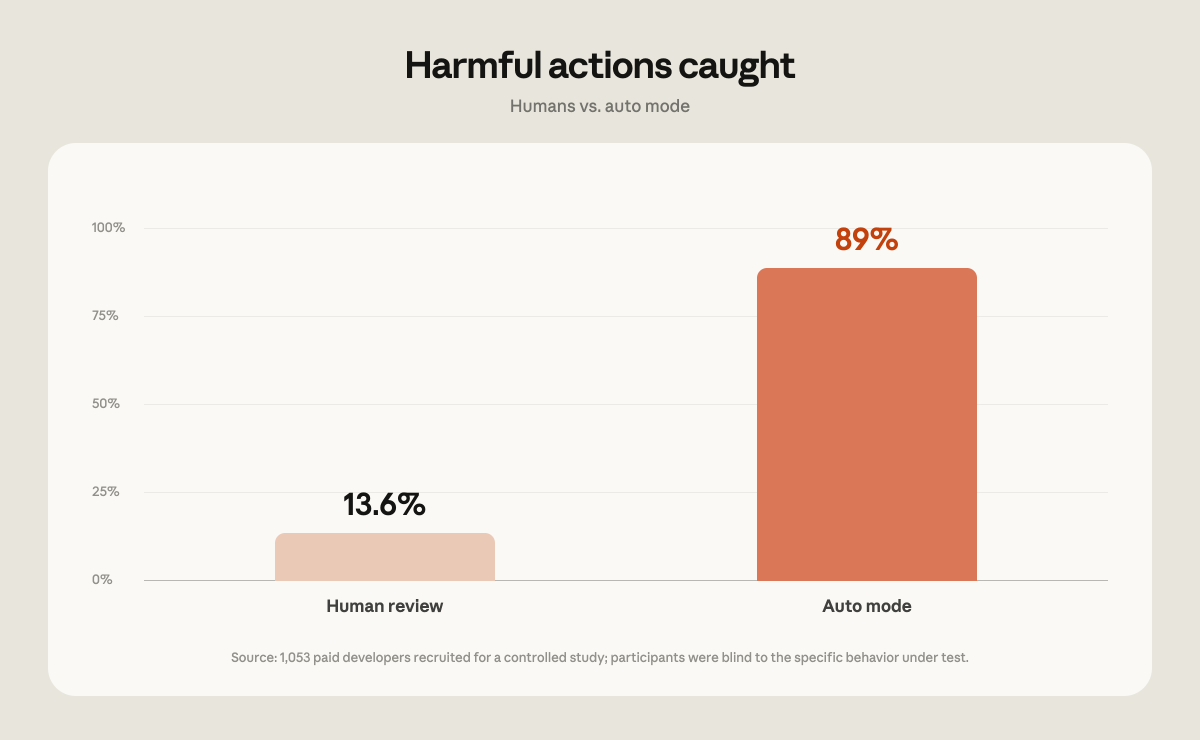
When AI repeatedly asks you for approval, you end up clicking "yes" without thought. The human-in-the-loop becomes a rubber-stamping ritual. Auto mode is a much better mechanism as it only asks a human if absolutely needed (e.g. for "rm -rf"), while delegating most of the capable decision making to AI.
Side Effect of Weight-loss Drugs
 Hatty Willmoth
Weight-loss drugs could delay oral medication and even dampen its response. And if that's true, what do we make of oral drugs such as contraceptives or cancer drugs? We hear of anecdotal evidence, so-called "Ozempic babies" where pills fail women on GLP-1s.
The challenge with new medication (as always) is that side effects may take many years to form and get studied. Small biological changes take time to accumulate. Changes might occur in groups underrepresented in trials, and are hence overlooked.
The Future of Internet Content
 Vincent Schmalbach
Interesting that TIME says its bot traffic already outnumbers its human traffic on most days. That points to a parallel internet - one for bots (with ads, affiliate links, etc.), and another optimized for people.
This challenges an old assumption: that the page I see is broadly the same page an automated system retrieves. We’ve already seen invisible text used to prompt-inject LLMs. But if ubiquitous sites increasingly serve different content to bots, this could become common even on major news sites.
How can AI verify what it retrieves is trustworthy? One technical response may be to inspect and compare the actual network responses, detect injections/ad-like content, and remove it before the text reaches the model. But then again - who decides what counts as "real"?
Member discussion